
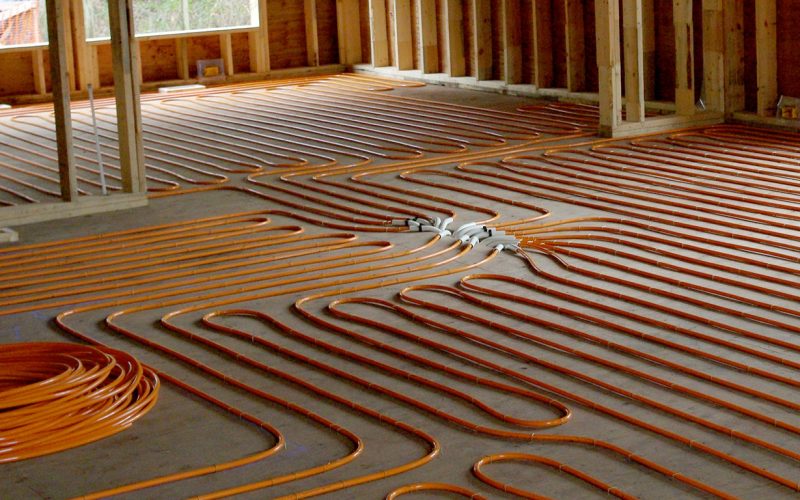
Marrying the best of both worlds, the hybrid radiant floor heating system capitalizes on the strengths of both electric and hydronic systems.
Hybrid Radiant Floor Heating Systems
Essentially, this system employs electric heating for smaller, standalone spaces like bathrooms, while relying on the hydronic approach for larger areas or where continuous heating is necessary.
What makes the hybrid system particularly attractive is its adaptability. Homeowners can prioritize their heating needs based on the frequency of room usage and size. For instance, while a bathroom might benefit from the quick warmth provided by the electric system, living spaces or bedrooms might require the sustained, gentle heat of the hydronic system.
This dual approach doesn’t just ensure optimal comfort but also makes energy consumption more efficient. That said, a hybrid system will make a new construction project more complex, adding additional time and expense.
Installation
Given that the hybrid system is a combination of the two aforementioned systems, the installation process is essentially a fusion of the steps detailed above.
- Determine Zones: Start by demarcating which areas will utilize electric heating and which will deploy hydronic heating.
- Follow Respective Installation Steps: For the electric zones, adhere to the electric system’s installation steps. Similarly, for the hydronic zones, the installation steps for the hydronic system should be followed.
- Unified Control System: Given that this is a hybrid system, it’s beneficial to have a unified control system or thermostat that can regulate both electric and hydronic systems, ensuring that the temperature remains consistent throughout the property.
Pros and Cons
Pros:
- Flexibility: Combines the best of both electric and hydronic systems, allowing for customized heating solutions.
- Adaptable Costs: Can optimize the operational cost by using electric heating in smaller zones and hydronic in larger areas.
- Efficient Energy Use: Can be paired with renewable energy sources, like solar panels, for more eco-friendly heating.
Cons:
- Complex Control Systems: Requires sophisticated control mechanisms to manage both systems seamlessly.
- Higher Initial Costs: The integration of both systems can elevate the upfront installation cost.
- Maintenance Variances: Different parts of the system (electric and hydronic) might have differing maintenance needs and schedules.
Estimated Costs ($)
Prices can range from $10 to $18 per sq.ft., depending on the configuration.


